

Have you ever been told to seek out shoes with maximum cushioning, arch support, and/or a thick, rigid sole? The logic seems sound: protect your feet from the harsh ground and absorb the impact of every step. But what if I told you this type of shoe could actually be a disservice to your body? It is suggested that a more natural approach—barefoot-style shoes—are the key to embracing your body’s full potential.
Barefoot-style (or minimalist) shoes are a stark contrast to traditional footwear. They are defined by three core principles:
- Zero-Drop Sole: The heel and the forefoot are at the same height, just as they are when you’re truly barefoot.
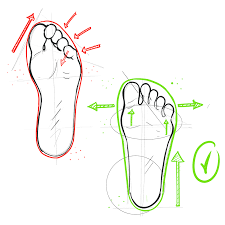
- Wide Toe Box: The front of the shoe is wide enough to allow your toes to splay naturally. This provides a stable, powerful base.
- Thin, Flexible Sole: The sole offers minimal protection from the elements but maximum connection to the ground, allowing your feet to feel and respond to the terrain.
So, why do I care so much about this?
Your feet are an incredible feat of biological engineering, with 26 bones, 33 joints, and over 100 muscles, tendons, and ligaments. They are designed to be strong, flexible, and adaptive. However, when we place them in restrictive, cushioned shoes, we essentially put them in a cast. The foot’s intrinsic muscles become weak and dormant, relying on the shoe’s external support instead of doing the work all on their own.
Barefoot shoes act like a gym for your feet. By stripping away the artificial support and cushioning, they force your foot muscles to engage with every step. Over time, this can lead to:
- Stronger Feet and Arches: Research has shown that wearing minimalist footwear can be as effective as dedicated foot-strengthening exercises in building muscle size and strength in the feet.
- Improved Balance and Proprioception: The thin sole allows for enhanced sensory feedback from the ground. This “ground feel” helps your brain better understand your body’s position in space, leading to improved balance, coordination, and a reduced risk of falls.
- A More Natural Gait: Traditional shoes with a raised heel encourage a forceful heel-strike when walking or running. Barefoot shoes, on the other hand, promote a more natural midfoot or forefoot strike, which can reduce the impact on your joints and improve your overall walking and running mechanics.
The Ripple Effect on Your Entire Body
The benefits of barefoot shoes don’t stop at your feet. Since your feet are the foundation of your body, strengthening them has a cascading effect on your entire musculoskeletal system. The zero-drop design can help reduce strain and alleviate chronic pain in areas up the physiological “chain”, including the ankles, knees, hips, and even the lower back.
The ability of your feet to properly absorb shock and provide a stable base can also lead to:
- Reduced Joint Pain: A more natural foot strike and stronger foot muscles can better dissipate impact forces, taking pressure off of your knees and hips.
- Better Posture: Proper foot and ankle alignment can lead to a more upright posture, which in turn can reduce neck and shoulder tension.
- Fewer Foot Problems: The wide toe box allows your toes to splay, helping to prevent common issues like plantar fasciitis, bunions, hammertoes, and bunionettes.
It’s important to remember that transitioning to barefoot shoes is not an overnight process. Your feet have been “asleep” for years, and a sudden switch can lead to injury. Think of it like starting a new workout routine—you have to begin slowly and build up your strength.
- Start Slow: Begin by wearing barefoot-style shoes for short periods of time, a few hours a day, and gradually increase the duration.
- Listen to Your Body: Pay attention to any discomfort or pain. Your feet will be working muscles they haven’t used in a long time, and some soreness is normal, but sharp pain is a sign to slow down.
- Mix It Up: You don’t have to throw out all your other shoes. A healthy approach might be to incorporate barefoot shoes into your routine for casual walking or light workouts, while still using more cushioned shoes for high-impact activities like long runs on hard surfaces.
There are several brands you can that boast a minimalist shoe with wide toe boxes, but one trick to you use to ensure that the shoe is right for you is this:
Pull the sole out of your shoe, place your foot directly on the sole – does your foot or toes hang off any part of the sole? Yes? – then it is not a wide enough toe box. No? Great, you’ve found yourself a good option. Run through the rest of the list to make sure they match the full description above for a minimalist shoe!
Some of my tried and true brands include Altra Running, Vivo Barefoot, Groundies, Feelgrounds, and some styles of Brooks Running or Merrell
References
- Curtis, R. et al. (2021). Daily activity in minimal footwear increases foot strength. Retrieved from livrepository.liverpool.ac.uk/3137687/
- Lieberman, D. E. et al. (2010). Foot strike patterns and collision forces in habitually barefoot versus shod runners. Nature.
- Mika, A. et al. (2016). Effects of heeled shoes on postural stability and muscle activity during quiet standing in young healthy women. Scientific Reports.
- Ridge, S. T. et al. (2019). Walking in Minimalist Shoes Is Effective for Strengthening Foot Muscles. Medicine & Science in Sports & Exercise. Retrieved from pubmed.ncbi.nlm.nih.gov/30113521/
- Robbins, S. E., et al. (1997). Athletic footwear and running injuries. Clinical Journal of Sport Medicine.